Perspectives
7wire Ventures Presents: Top of the Ladder Featuring Karoo Health Co-Founder & CEO Ian Koons
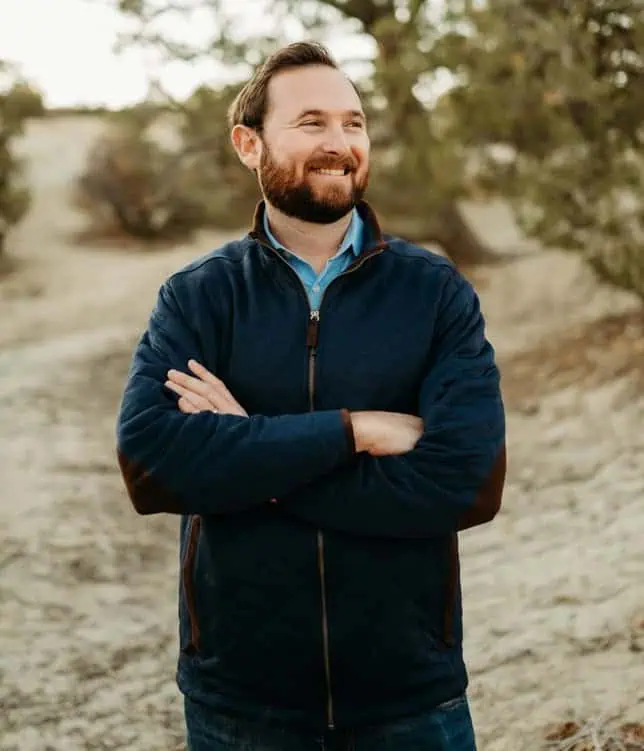
Heart disease is the leading cause of death in America. Every 34 seconds, it claims a life. And yet the way most cardiovascular care gets delivered hasn’t fundamentally changed. Care happens in the exam room a few times a year, while the rest of a patient’s life — the stretch where small problems quietly become big ones — goes largely unwatched. The system still pays for volume: more visits, more procedures. It doesn’t sufficiently pay for keeping people well. Founded in 2021, Karoo Health was built to change that. One of the first companies to make value-based cardiovascular care work in practice, Karoo partners with cardiology groups and health plans, pairing dedicated care teams — some on-site, some virtual — with a technology platform that builds a 360-degree view of a patient’s heart health, so the heart is watched between visits, not just during them. In deployed programs, independent analyses have reported reductions of more than 40% in emergency room visits and hospital admissions, alongside a double-digit drop in total cost of care.
Karoo’s co-founder and CEO is Ian Koons. A serial healthcare entrepreneur and operator, Ian founded Patient Ready Clinicians, led provider growth at Advantia Health, and built out Ovation Fertility’s national network before starting Karoo. The origin of the company, though, is personal: Ian started Karoo after losing his best friend to heart disease, determined to build something so that fewer people get the phone call he got. Much of his work since has centered on one of the toughest challenges in medicine: convincing cardiologists to change how they get paid.
In our latest Top of the Ladder feature, we sat down with Ian to discuss his path into healthcare, why cardiology has resisted value-based care for so long, what it means to build infrastructure rather than another app, how Karoo wraps care around patients between appointments, and where he sees the future of cardiovascular care.
Tune in to our full conversation with Ian on Apple Podcasts or Spotify, or read the complete Q&A below.
To start, could you share a little bit about your childhood background? What did you want to be when you grew up, and what shaped who you are today?
I grew up the son of a physician, and I always went in the opposite direction. I didn’t want to be part of healthcare. I actually wanted to work in sports and be a sports agent; I was a collegiate athlete, I played tennis in college, and that was the path. But I always had an entrepreneurial mindset. My first-ever job came about because my parents told me to get one, and instead of getting a real job, my best friend and I started a curb-painting business. We’d go out early in the mornings, and it taught us hard work and dedication. We put up flyers, and I still remember this: we charged $10 for one side, $15 for both, and we’d work all day, nonstop, for six or seven weeks at a time. We did really well, and it clicked: you can make infinitely more money, and own your own destiny, building something yourself than working for others. That was the entrepreneurial unlock.
I resisted healthcare for a long time. After college, my first job was with ESPN Radio, and I was a natural at it, but I’m persistent and very competitive, and there wasn’t much upward mobility in short sprints. That’s when I started reflecting on what I wanted to be when I grew up. My dad practiced in a different era of medicine. People would drive 45 minutes to an hour to see him, he’d spend 45 minutes to an hour with each patient, and he was laughing in the hallways. So I had a different view of what medicine actually was, and could be. When I really sat down with it, what I landed on was that I want to make as big an impact on society as I possibly can. I know that’s cliché, but it really was, and is, foundational for me. So I went back to my dad and said: maybe this healthcare thing is something I should pursue.
Your path to cardiology was anything but linear. You started out in sports before moving into healthcare, then founded Patient Ready Clinicians, led provider growth at Advantia Health, and built out Ovation Fertility’s national network through IVF lab acquisitions before starting Karoo. What did each of those chapters teach you, and what carried over into how you build today?
Patient Ready Clinicians was my introduction to how hard it is to build a true, viable company from an entrepreneurial standpoint. Ovation and Advantia were really about connectivity: how to operate and grow to scale, how networks work, and what the implications are of the decisions and paths you take when you’re building national, scalable companies, both venture- and private-equity-backed. All of that shaped how I wanted to build what ultimately became Karoo.
What inspired you to start Karoo?
My best friend had a heart attack at 29. I always wanted to create a technology and care-delivery model that would have prevented that outcome for the people I love. When the light bulb went off, my co-founder and I did a deep dive on the current state of cardiovascular care. Through that, we connected with the research of Mark McClellan, the former CMS administrator, who had been commissioned by the American Heart Association to answer a question: why are outcomes getting worse, not better, when nephrology, oncology, and other disease states have made notable advances, but the largest one hasn’t? Unsurprisingly, the answer was that there’s no value-based care. So we talked to every cardiologist who would talk to us, and we asked one simple question: if you had unlimited time and resources, how would you build this? What came back was that now, more than ever, is the time to enable that transition from volume to value, in close collaboration with our physician partners. That was the origin of Karoo.
At its core, Karoo asks cardiologists to change how they get paid, shifting from being paid for volume to being paid for value. Why is cardiology the right place to take that on, and why now?
If we’d started this 10 years ago, we would have failed. We never would have partnered; it just wasn’t a thing. What changed is a convergence on both sides. On the payer side, they’re under stress from earnings calls, staring at one of their biggest expenses, which is cardiac spend. On the provider side, you had a compression of fee-for-service rates. Cardiologists were working infinitely harder to make the same income, with seemingly fewer resources than before. Layered on top of that was a moral and ethical piece: I’m doing all these things, I’m working hard, but I’m not seeing my patients get better, I don’t have the resources, and I’m seeing them show up in the ED. There has to be an alternative. So from a timing standpoint, it’s better to be lucky than good, and we were ultimately lucky in when we launched Karoo.
Primary care, nephrology, and oncology built value-based models years ago, while cardiology largely stayed fee-for-service. What made cardiology so resistant to the shift, and does that make it harder to crack or riper for it?
The resistance is what I just alluded to: if cardiologists are making a lot of money doing what they’ve always done, they’re not motivated to change. What’s different now is that they’ve reached a point where the real question is how you solve both time and money for them. The other piece is sophistication. We learned from our predecessors, the value-based care companies that largely failed, and we applied those lessons. Not just in providing the scaffolding to be the great equalizer for what cardiologists are trying to accomplish, but in customizing the amount of risk they take alongside us. That was a key unlock we noticed early. Historically, groups would go to providers in other subspecialties and say, “change your whole practice, do all these things, and we’ll give you — say, $5,000.” And the response was, that’s not worth it. We wanted to be the equalizer and the scaffolding, doing all of it in the background and providing the infrastructure, so they can share in the financial risk on patients they’ve known for years. That’s what differentiates us. We tell them: we’ll give you all the tools, we’ll give you everything. You know your patients better than we do. Rather than inundating you with a list of things you have to do, let us provide the infrastructure so that, as much as possible, you don’t notice we’re there, and we’re aligned at every step.
Karoo pairs care teams that wrap around the patient between appointments with software that builds a full picture of someone’s heart health. For a patient used to seeing their cardiologist twice a year, what’s different day-to-day once Karoo is involved?
Early in our model, we built a group of care team members we call Patient Enrollment Specialists, who sit right at the point of care, that first interaction the patient has. Twice a year, the cardiologist’s message is basically: work out, be healthy, see you later. The patient walks out and thinks, “what did the cardiologist just say?” Then they go back to their day-to-day routine. We all know that cycle. Under the Karoo program, because we’re so closely aligned with the cardiologist, the message becomes: work out, be healthy, and by the way, there’s a Karoo partner waiting for you in the lobby. We capture that handoff, that interaction, when trust is highest. For so long, these patients — whether they come in twice a year or they’re living with heart failure — haven’t had support to guide them through their cardiovascular journey, in whatever form it takes. We capture the handoff, and from there it’s the scaffolding we provide: the LCSW, the psychosocial support, the nutrition, all the touchpoints that help them through the journey. That’s driven the enrollment and engagement numbers we’re proud of, and we tie it all back as a true extension of, and partner to, the close to 700 provider practices across our network.
You’ve argued the real gap in cardiac care isn’t software, it’s infrastructure – the systems that get people the right care at the right time. What does it mean to build infrastructure rather than another app, and how does that change what you prioritize?
Apps are generally nice-to-have; they’re not have-to-have. Infrastructure is the foundational layer that enables the push and pull of what a cardiologist actually needs: to accelerate care and meet patients where they are, without undoing the foundation they’ve built over 20, 30, 40 years. So we go in and say: okay, you have an LCSW, you have a nurse. Let us add to that and amplify it. Let us build the technology for you in a forward-deployed way, whether that’s GDMT programs or attribution logic that gets patients to the right physician at the right time, rather than just bolting on wraparound services. It’s that infrastructure layer that builds trust, so the relationship isn’t transactional. It’s a genuine partnership.
Heart disease is still the leading cause of death in America, taking a life every 34 seconds. Where do you see cardiovascular care, and value-based care in cardiology specifically, five years from now? What has to be true to get there?
I think it’s the evolution of connectivity between practices and, ultimately, all the stakeholders. We have a good grasp on the care teams; the next step is using AI to be truly proactive about closing the gaps that, until now, there’s been a technological inability to close. As AI evolves, we can deploy systems that catch those gaps. And then it’s not just the intervention, it’s whether we have the right team member at the right moment, someone who actually knows the patient rather than a random person who doesn’t. That immediate trust and follow-through is how you build a real vertical stack. From a contracting standpoint, a lot of programs in other specialties have failed because of comorbidities, attribution issues, and so on. Ultimately, value-based care is an alternative payment model, but for that model to deliver maximum value, you need both the infrastructure and a contract that works across specialties. I’ve said publicly where I think this goes: you take a population, you force the hand of high-growth technology companies across different verticals (Karoo and others) and align them to share the patient back and forth. There’s so much waste and opportunity in the system that if you get both the contract and the systems around it right, you can build a genuinely multi-specialty, aligned approach.
You’ve learned a lot about hiring over the years. How has that shaped the way you build the team at Karoo, and what do you look for now?
In my early days, I had a predisposition to hire for logos: they worked at this place, or that venture-backed startup. I over-indexed on logos instead of going deep on what actually makes people tick. There’s a line I’ll steal from Josh Wolfe at Lux: chips on shoulders put chips in pockets. What I’ve learned is that there has to be cultural alignment, but you also have to understand the real driver behind someone’s desire to succeed, rather than the fact that they happened to pass through high-growth startups. And you have to go a level deeper on what they actually did there. There’s a big difference between being employee 5 and employee 50, or 100, or 500. So we take the evaluation a level deeper and really get to know the people who could end up in the trenches with us.
Are there any specific books or podcasts that have had a significant impact on your personal growth or leadership style?
Recently I’ve been a huge fan of Marcus Aurelius and Meditations. That comes from the reactivity that I had in my earlier years. The book has helped me take a step back and focus on what I can control day-to-day. There are a million things happening in the business I might once have reacted to, and now it just doesn’t matter. What matters is what I can affect, what my team can do, and how we show up every day.
What’s one piece of advice you would offer to other healthcare startup CEOs navigating today’s challenges?
You start a business with an idea, and then you iterate on it. In my experience, wherever you think you’ll end up, you’ll be wrong, so stay open-minded about the pivots along the way. And the most simplistic thing I tell entrepreneurs is this: stay alive long enough for good things to happen.