Perspectives
7wire Ventures Presents: Top of the Ladder Featuring Brightline CEO Kari O’Rourke
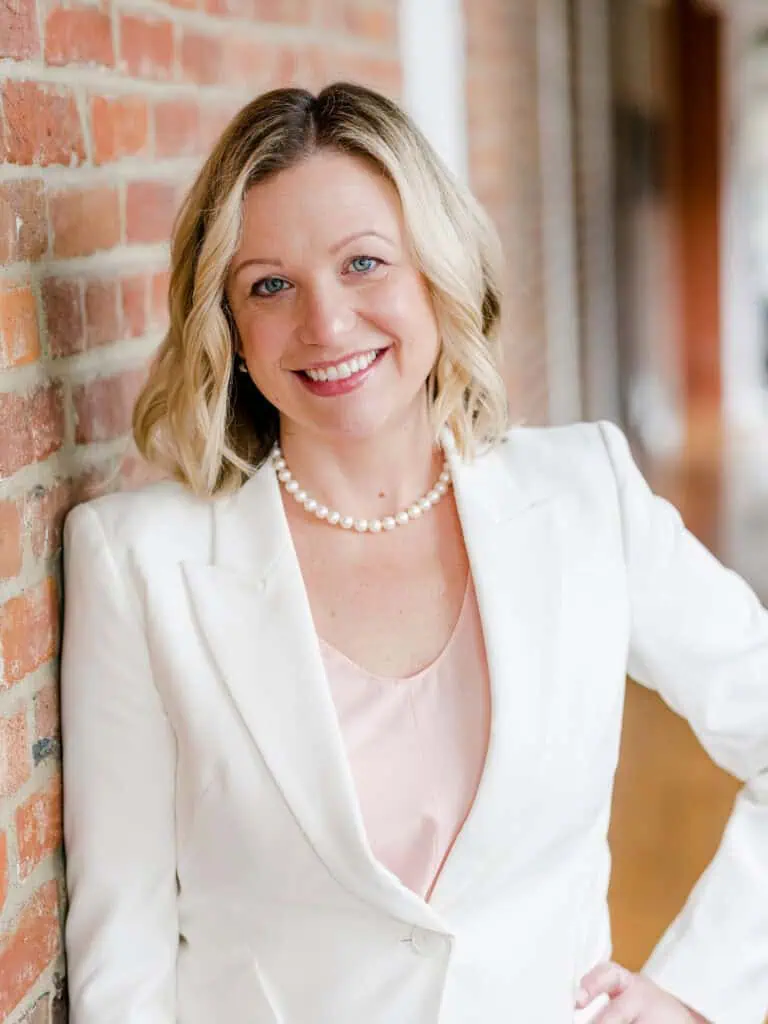
Kari O’Rourke is the CEO of Brightline, a digital health company transforming how families access pediatric and youth mental health care. Today, nearly one in five children in the United States has a diagnosable mental health condition, yet for most families the experience of getting a child help hasn’t fundamentally changed. They still face months-long waitlists, fragmented referrals, and confusing costs. Founded in 2019, Brightline has become one of the country’s leading pediatric mental health platforms, serving families through a hybrid model that pairs virtual care with in-person clinics and building toward a coordinated Family Mental Health Home that brings evaluation, treatment, ongoing care, and parent support together. Through a first-of-its-kind agreement with the California Department of Health Care Services, Brightline has brought free behavioral health support to children across an entire state. For more than 77% of those families, it was their first and only access to mental health care.
A certified nurse practitioner with more than twenty years of experience, Kari brings something rare to the CEO seat: she’s not just a healthcare executive, but a clinician. She began at the bedside as a NICU nurse before holding a leadership role at CVS Health, serving as Chief Operating Officer at Cortica and Landmark Health, and most recently as President of Imagine Pediatrics.
In our latest Top of the Ladder feature, we sat down with Kari to discuss her path from clinician to CEO, what it was like to step into a founder-built company at a pivotal moment, Brightline’s mission to reach families the system has left behind, and her vision for treating pediatric mental health with the same urgency and rigor as physical health.
Tune in to our full conversation with Kari on Apple Podcasts or Spotify, or read the complete Q&A below.
To start, could you share a little bit about your childhood background — what did you want to be when you grew up, and what shaped who you are today?
I grew up in a family of tinkerers — engineers, clinicians, people who were always asking how systems work and why. That curiosity was directed early by an AP biology teacher who made science feel urgent and alive. Combined with watching my mother practice nursing, I found a path that tied together everything I loved: science, systems, and people.
I started as a NICU nurse, and what that taught me immediately was that the patient is never just the patient. In pediatrics, the family is the unit of care. You’re preparing a premature infant for discharge, yes — but you’re also preparing terrified parents to continue that care at home, often without much support. That lesson — that outcomes depend on the entire ecosystem around a patient, not just the clinical encounter — has shaped everything I’ve done since.
You trained as a nurse practitioner and spent the early part of your career in clinical settings. That’s a very different starting point than many digital health CEOs coming from finance or consulting. How did your clinical background shape how you think about building companies?
It shapes everything — and I mean that literally. I put myself in the clinician’s shoes, patients’ shoes, admins’ shoes, and caregivers’ shoes.
What clinical training gives you that no MBA program replicates is pattern recognition across thousands of patient encounters. I worked across acute care, post-acute, ambulatory, specialty, urgent care, virtual, and in-home settings. That full acuity spectrum matters because you start to see the same patient showing up in different places at different points of deterioration — and you realize how complex the patient journey has become.
By the time someone arrives in an emergency room or urgent care, something preventable has already happened. The clinician in me always asks, “How does this improve care?” The operator in me asks, “How do we make this sustainable and bring it to the people who need it?” The best healthcare organizations have to hold both questions simultaneously. I end a lot of meetings with the same line: “Patients are waiting.” It’s intentional — it keeps urgency and empathy in the room.
You’ve moved through CVS Health, then Landmark and Cortica as COO, then President of Imagine Pediatrics. What did each chapter teach you about scaling care models?
What I can say is that working across those environments reinforced one through-line: the most effective care organizations take what I call an “air traffic controller” view of the patient. They understand everything a person needs and deploy resources — clinical and non-clinical — to meet those needs in a coordinated way. The organizations that struggle treat each encounter as a transaction. The ones that succeed treat it as a relationship, a train stop on the journey to a unique destination.
I also learned that you can’t separate care delivery, reimbursement, and policy. They’re three legs of the same stool; incredibly interdependent upon one another. Most organizations I’ve seen fail to do so, not because the clinical model was wrong, but because the business model and the policy environment weren’t aligned or evolved accordingly. There is a natural evolution of each company, and timing is everything.
What inspired you to join Brightline as CEO?
Naomi and the team built something genuinely rare: a clinical model that’s both rigorous and family-centered, in a space — pediatric mental health — where most solutions are still fragmented point solutions. I love to focus care on the family as the unit. When caregivers, in addition to patients, are taught skills and receive the care they need, the multiplier effect across the family is actualized.
Patient behavior has demonstrated a need for hybrid care delivery, particularly in this space. In the age of AI, challenging systems to get started, let alone navigate and working from home, it’s hard to establish trust and engagement with families. Meeting caregivers and parents where they are at and giving choice in modalities of care (onsite, virtual, hybrid) has proved to be a differentiator for us. Early intervention in mental health changes trajectories. We have evidence for that. But access to evidence-based mental health has remained a persistent, serious barrier. Brightline is one of the few organizations positioned to change that at scale.
I’ve spent my career helping build organizations that connect care across settings. Brightline gives me the opportunity to do that in the space where the need is arguably greatest — pediatric and youth mental health.
Taking the CEO seat of a founder-built company is one of the harder transitions in startup leadership. How did you approach the first few months?
I listened. Deliberately and systematically.
My first priority was understanding what made Brightline work and what didn’t — what families valued, what the clinical team had accomplished and where the real opportunities were. My goal was to continue building on solid foundation, iterate to a sustainable business model, and expand our high quality of care, starting in areas of highest need.
What I kept coming back to was a parallel from my time at CVS, where MinuteClinic became a genuinely trusted, nationally recognized destination for care. People knew what it was, when to use it, and why it was worth going back to. Brightline has the clinical model and the track record to become that trusted destination for pediatric behavioral health. That’s the opportunity I’m focused on — not just expanding access, but building the kind of institutional trust that sees our families, wraps care around the family and sees them on their path to wellness. Then the flywheel continues.
For a family whose child is struggling, what does the journey of trying to find help actually look like today — and where does the system fail them first?
The failure starts before they even make a call.
Most parents don’t know where or when to begin. Their child is struggling — with anxiety, attention issues, behavior changes, something they can’t quite name — when is it bad enough that it can no longer be managed at home. Where do caregivers begin? The system immediately asks them to become their own care coordinator at the moment they’re least equipped to do so.
They may start with their pediatrician, friend or colleague for a referral. They make the calls. Referrals go to three different places. Evaluation options are 9 months out, and insurance doesn’t cover them. The site that does the evaluation doesn’t support ongoing care, and medication management is somewhere else, again. Parent support is usually an afterthought, if even addressed. Think about that. Those who spend the most time with the patient, critical for reinforcement, are often forgotten, deprioritized.
We’ve made real progress reducing stigma around mental health, and that matters. But reducing stigma without improving access just means more families know what they can’t get, and it creates extreme strain on schools and systems that are already underfunded and overloaded with panel sizes we’ve never seen before.
How is Brightline differentiated — and what excites you most about where the company is headed?
The differentiator isn’t just access. It’s what happens once a family is in care.
We use measurement-based outcomes — tracking clinical progress at every step so families can see whether care is working, not just whether appointments are happening. That level of accountability should be the standard in mental health.
We’re also building toward what we call a Family Mental Health Home — a coordinated model that addresses evaluation, treatment, parent support, and ongoing care together, rather than asking families to stitch it together themselves.
The early results speak to the gap we’re filling. Through BrightLife Kids — our partnership with California and CalHOPE — we’ve reached hundreds of thousands of children across all 58 counties. More than 77% of those families told us it was their first and only access to mental health support. That number is striking, and it drives everything we do. I want to bring more programs and models of care like this to other states.
Brightline started virtual-first and is now building physical clinics. What did the virtual model teach you that’s shaping how you build in person?
The biggest lesson: families need flexibility, but flexibility isn’t the same as choice between two separate things.
Virtual care removes real barriers — commute time, scheduling and the stigma of walking into a building. And it works well for many services. But we learned it isn’t the right fit for every child, every service, or every moment in a care journey. Some evaluations require in-person interaction. Some kids engage differently face-to-face. And for many families, a physical place to go creates a qualitatively different level of trust and experience. We’ve also seen an incredible relationship build with local healthcare providers and ecosystems that would be hard to replicate in a virtual-only model.
So we’re not asking families to choose. We’re combining the access advantages of virtual with the relational depth of in-person, based on clinical need — not operational convenience. That’s what a real hybrid model means, and it’s what families are telling us they want.
Where do you see pediatric mental health in five years — and what has to be true to get there?
Listen, I’ve seen mental health make some incredible strides in de-stigmatizing the value/need of prioritizing mental health. Where I’d like to see mental health move into is being treated with the same urgency, funding, and clinical rigor as physical health. We’re not there yet.
Getting there requires three things working in parallel: earlier intervention, because the evidence on early behavioral health support is real; stronger outcomes measurement, because behavioral health needs the same accountability infrastructure that physical health has built so that we can invest resources appropriately; and family-centered care models that stop treating the child in isolation, and valuing the caregivers’ impact.
A child’s mental health journey doesn’t happen in a vacuum. Parents, caregivers, schools, pediatricians — they’re all part of the system of care. Until we build models that support that entire ecosystem, we’ll keep patching problems instead of preventing them.
What’s your superpower?
Building best-in-class teams. That is everything. I’ve had an incredible journey understanding what A+ looks like and accept nothing less. Building teams that are smart, quick, dedicated to the mission, and love to win, makes work so much fun!
What’s one piece of advice for other healthcare startup CEOs navigating today’s challenges?
Stay relentlessly close to the patient and family experience — not as a values statement, but as a business discipline. Dedicate regular time in the messy middle.
Healthcare is full of noise: funding cycles, regulatory shifts, policy swings, competitive pressures. All of it can pull your attention away from the core question, which is whether you’re actually solving the problem you set out to solve.
If you’re delivering real outcomes and building models that can scale, that focus becomes your best defense against every other distraction. Startups don’t dry out, they drown. Focus is critical in getting your core model right, then you earn the right to grow.